
Balance needed between heritage and development
Winelands Security Initiative
The Western Cape, under DA administration, is a glaring exception to the poor state of administration in the rest of SA, with infrastructure being well maintained, basic services being rendered, and public service being the best in the country, leading to a real estate boom as semigrants moving to the Cape, the Western Cape and Winelands in particular, in search of a better governed and safer environment.
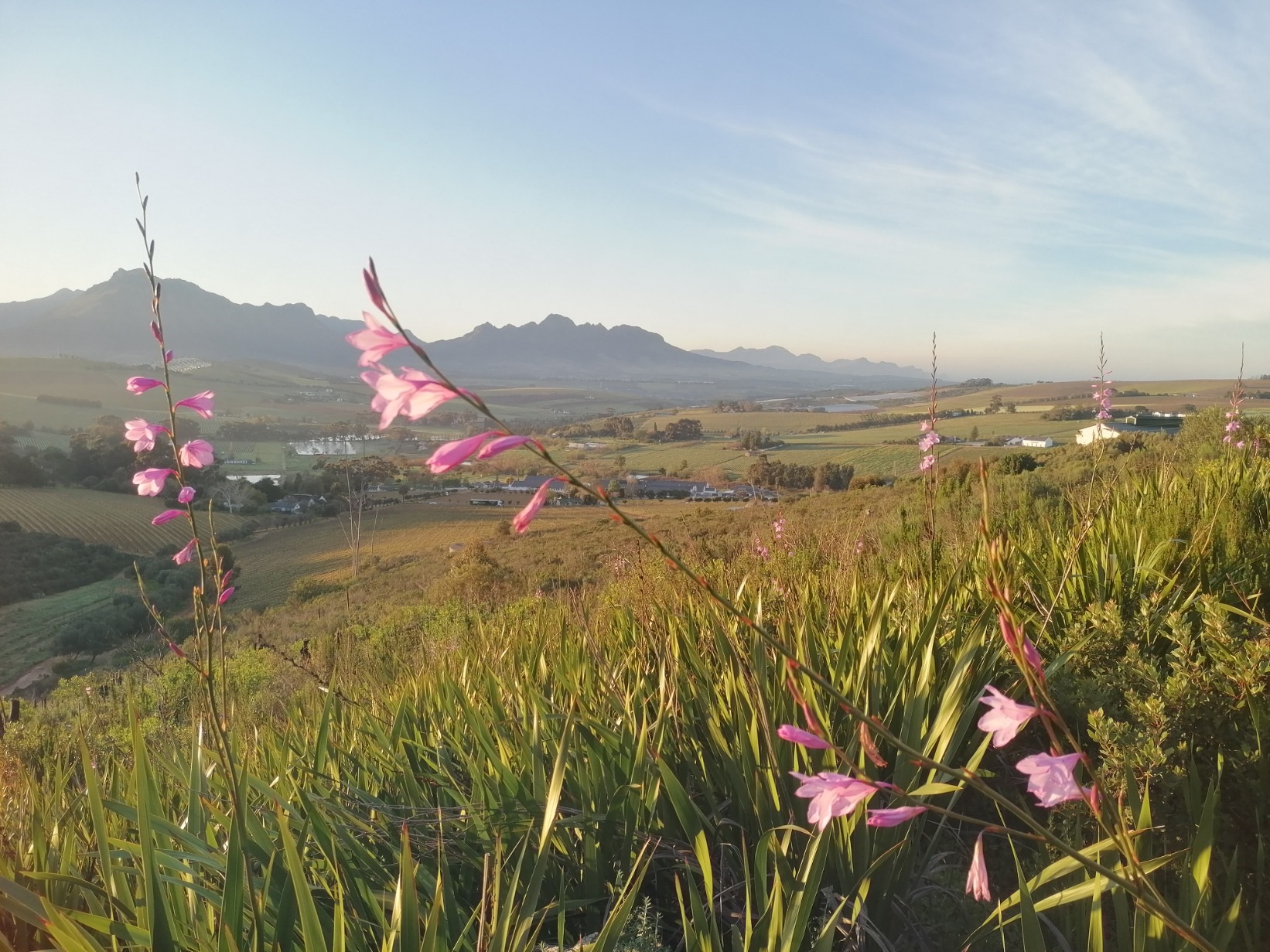
The Cape Winelands are increasingly being targeted by developers that pose a major threat to the natural and winelands environment, which relies heavily on the wine industry and tourism for revenue and economic growth. The fact that the DA government in the Western Cape has designated Stellenbosch and surrounds as a growth area has increased this threat.
Finding a balance in the preservation and conservation of Stellenbosch’s heritage. natural and agricultural environment and sustainable development is critical for the future wellbeing of not only Stellenbosch and environs, but the Cape Winelands and the Western Cape.
I am using a SWOT framework for my comments.
A fundamental, challenging aspect of sustainable development in WC024 is the fact that it is comprises 14 widely dispersed, well-established settlements.
Strengths
- Historic wine estates and farms
- Natural, scenic environment – mountains, rivers, vineyards
- Historic legacy, character of Stellenbosch
- Schools, college and university
- Sports facilities
- Innovation capabilities/resources
- Intellectual capital in the community
- Wealthy residents
Weaknesses
- Lack of public transport, rail in particular
- Inadequate traffic law enforcement especially i.r.o. taxis and parking infringements
- Jurisdictional restrictions i.r.o. local/provincial/national properties
- University of Stellenbosch’s autonomic approach to development
- Vague zoning and planning policies
- Lack of damaging penalties for errant developers and their principals
- Expensive and lengthy litigation by government, at taxpayers’ expense, when opposing Municipal Planning Tribunal (MPT)decisions and ratepayers’ legal objections to mayoral override of Directorate Planning and Development, MPT, and council decisions
- Government using taxpayers’ money to oppose legal challenge of their decisions by taxpayers, lack of personal accountability
- Appellate authority of executive mayors
- Lack of community relationship on the part of officials and councillors – who generally talk at, not with the community
- General apathy of civil society re local government decision making activities
- Lack of personal accountability and penalty of councillors and officials
- Political party allegiance and duty superseding community accountability
Threats
- The “big picture/greater good ” argument of provincial government and racial attitude and policies of national government
- DA authoritarian and top-down approach to government
- Uninformed public participation processes
- Inadequate local government communication
- land invasions
- National departments’ properties in WC024 being neglected
- Influx from the Eastern Cape and elsewhere threatening the environment (Papegaaiberg)
- Inadequate law enforcement
- Inexperience of councillors and loyalty to their party overriding commitment and loyalty to the community
- lack of personal liability of officials and councillors for errant decisions and wasteful expenditure
- Cost of councillors and officials
- SALGA and trade unions influence re administrative cost and terms of employment
- Piecemeal approach to development
Opportunities
- Civil activism
- Election 2024
- Collaboration between business, local government and civil society
- Constructive use of social media
- Weak personal contact and communication by authorities
- Dismal state of the national economy and resultant unemployment
- Poor delivery of basic services and neglect of maintenance of physical infrastructure by ANC government( railroads in particular
- ANC racism
- Xhosa/Zulu domination of national departments
Holistic Integrated development
A fundamental weakness in the IDP public participation process is the absence of a more comprehensive view of future development plans in the province and region, especially the former, where 30 – 50 year projections of infrastructural development are made based on census, demography and economic growth projections.
The watchful in the ranks of the public are not fooled by kite flying like the “flying saucer” issue on the R44, and the Western By-pass. being punted by greedy developers and their associates
One would expect authorities to provide a 30-year future scenario to the taxpaying public.
The US’s future plans should also be an integral part of the local government SDF and IDP, given the impact of the growth of the student population and the demands they make on town infrastructure, parking in particular. The US cannot be allowed to continue to act like an autonomous entity like the Vatican in Rome.
It was heartening to hear the provincial department of Agriculture actively participates in the policy and planning activities of the Stellenbosch Municipality, one assumes also the district municipality.
Conservation of the natural and agricultural environment
Stellenbosch has a world class environmental management plan, which is not being given the consideration it deserves.
Grape and fruit farming are major contributors to the Western Cape economy, a major source of employment and tourism.
This sector is being threatened by developers and lax zoning policies.
Preservation of heritage and the environment
Current historical records state that STB is the second oldest settlement in SA, Cape Town being the oldest – this may change with the revisionism by Africanists that is underway.
Prof. Todeschini, now deceased, and his team produced a comprehensive inventory of heritage assets in Stellenbosch and environs for posterity, a seminal work – this heritage, a major drawcard for tourists, is under threat by development, which is increasingly overshadowing the historic character of STB.
The age-old debate about personal, private interest vs community interest comes into play when the owner of a historic wine farm decides that he no longer wants to farm and sells out to developers. In this instance Local government has to be the arbiter of community vs private interest, based on its SDF, IDP and zoning policy.
Finding the balance between commercial and community interests is a daunting task, largely neglected by the general public. The task of public participation is left to activists in voluntary community organisations.
The precedents that are being set at the Brandwacht, Blaauwklippen and Libertas farms will have far – reaching, possibly devastating consequences for Stellenbosch and environs.
A holistic approach to sustainable development requires a grand landscape, agricultural and urban design and clear sense of proportionality, with due weight given to the fundamental characteristics of the area under consideration. A piecemeal approach to development of historic wine farms , as is already evident in partial developments of Brandwacht and Blaauwklippen farms, often referred to as “death by a thousand cuts” and the Trojan Horse strategy, followed by die Domino Effect, is a very dangerous development.
The Brown (“Coloured”) community in WC024
There is no denying that this community, the majority in Stellenbosch, have not received their just dues in WC024 development planning, applicants for housing have been on the housing list for 3 decades and longer and watch with anger as private developers build security estates and migrants from the Eastern Cape invade and occupy land and demand services. We see the effects of this lack of attention in the social problems in areas like Cloetesville and Jamestown.
Efforts by the mayor – the handing over of title deeds – are commendable and appreciated, but still fall far short of justifiable, legitimate expectations.
Safety and security
As expected, Stellenbosch and environs is facing increasing crime due to the state of the economy, social ills, profitability of crime, SAPS and NPA inability to cope, and lack of resources. Increasingly communities are having to move to security estates and private security is filling the vacuum in the public space caused by inadequate municipal law enforcement and SAPS capabilities.
Fortunately co-operation between all role-players in the community is very good, thus far limiting crime to petty crime in the CBD, serious crime being confined to mainly Cloetesville and Kayamandi.
Gangsterism and juvenile delinquency is increasing and will have to be curtailed, or else it will affect tourism and general safety in Stellenbosch.
The lack of urgency on the part of local government in dealing with camera blackouts is disturbing – there are affordable solutions for at least a limited number of strategically located LPR cameras.
The introduction of Winelands Safety Initiative car guards for after hours and the Buzzer community safety app is greatly increasing the safety of cars in the CBD at night and community safety in general. The US is in the process of coming on board, with the campus security control room responding to Buzzer alarms and students being informed of the usefulness of Buzzer – with 4 control rooms (ABC, AM, Campus Security and the municipal control room) responding to alarms, the closest personnel reacting.
A matter of concern is the current SRA exercise around Die Laan, where there is an attempt to extend the JSRA SRA – this is an illegal exercise and opens up a can of worms.
An SRA in the CBD will not resolve the vagrancy issue in the CBD, this has to be dealt with by the Department of Social Development, municipal social services, NPOs and NGOs.
In closing, all considered Stellenbosch is doing relatively well on the infrastructure services front, faults being repaired within hours, is struggling to find the balance between sustainable development and growth, needs to pay more attention to the needs and expectations of the Brown community, has to improve its safety and security establishment and urgently needs to address parking and traffic issue, particularly errant taxi drivers and their powerful owners.
Stellenbosch is fortunate to have the services of a highly competent municipal manager, Geraldine Mettler, and a seasoned mayor, who has her hands full balancing the pressures from business and the electorate, a thankless job.
André Pelser
Former Chairman, Stellenbosch Ratepayers’ Association